
- Working well on the psychological side is what will make us take one course or another in relation to the solution and evolution of the recovery.
- Overcoming the emotional and mental challenges associated with an injury can be as or more important than the physical rehabilitation itself.
- I have focused on three key factors for a strong and solid approach to an optimal solution: Positive attitude, Making it a challenge and Conscious conviction.
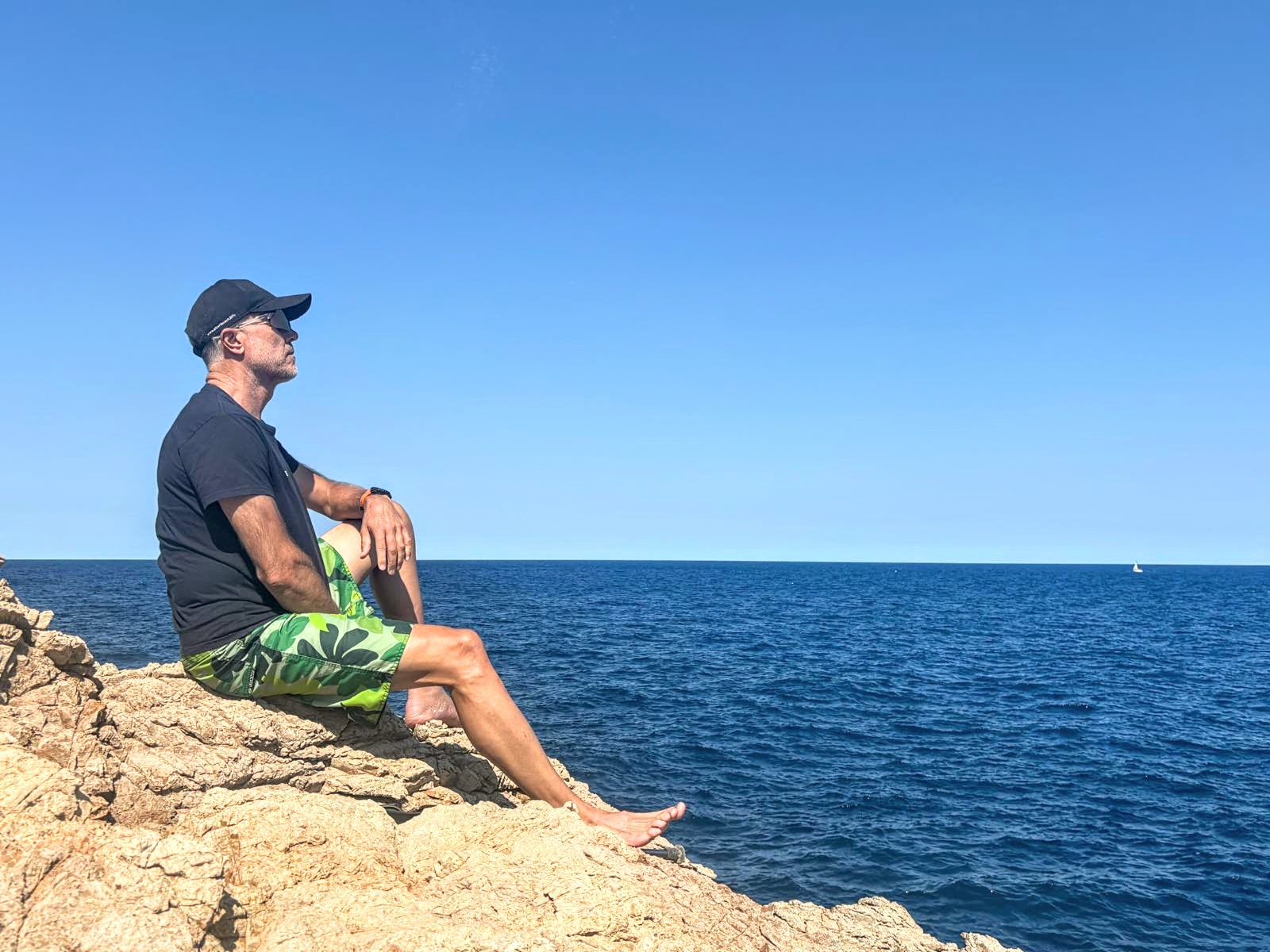
Mental work. The fifth section of my recovery plan, although actually, in order, it should be the first, because if this part fails, all the others fail (physical work, nutrition, hydration and microcirculation).
An injury, an illness or any other major problem is always a trauma, and always, without exception, greatly affects our psychological state. And logically, everything it brings from the outset is negative, because it is unwanted, because of the suffering it causes, and because of the setback it entails in our daily life, or in our sporting activity if that is the case.
If we do not pay close attention to the psychological management of this trauma, it can easily generate stress, negative emotions, tension, irritability, hostility, anger, sadness, frustration, anxiety and even possible depression. We are talking about a very delicate issue, which beyond the quality and speed of recovery, must be taken with the highest priority.
Overcoming the emotional and mental challenges associated with an injury can be as or more important than the physical rehabilitation itself.
In my case, it was clear to me from the beginning that this had to be one of the main pillars, both to avoid falling into a tailspin of post-injury malaise, and to recover as well and as quickly as possible.
There are many important factors in the mental work for recovery, but I have focused on these three, which help me to focus strongly and solidly towards an optimal solution: Positive attitude, Making it a challenge and Conscious conviction:
1.POSITIVE ATTITUDE: An overused expression without really understanding and applying it. It does not mean being optimistic and motivated with a recovery process. Optimism is good and always helps, but this is not what it is about. Having a positive attitude towards an injury means first being very realistic and accepting with full knowledge of the problem and all the effects, possibilities and limitations that affect us. And from there, to do well everything that depends on us, with the certainty that the process will go, truly and absolutely, as well as it could have gone, because we will not fail.
I am clear: This injury is my new reality, and I am going to be positive and make the best of it. And not just for my recovery, but to improve and learn in many aspects of my life.
2.MAKE IT A CHALLENGE: We have had an accident, and this is a major trauma that affects us very negatively. But I am going to decide not to experience it as a problem, but to approach it as a challenge. A problem can block you, it connects you with the negative, and it can put you in the role of a victim. But a challenge connects you with the positive, with all your potential, with the enthusiasm to achieve that goal, with the meaning of everything you are doing, with all the opportunities that will arise, etc.
Since the helicopter rescued me at the bottom of a ravine, I have spent less than 5% of my energy complaining or bemoaning my mistake or bad luck. And the remaining 95% of my energies have been spent focusing and working on the challenge of recovering well, in good health and quality, and as quickly as possible. My goal is to participate in the big expedition we have prepared in Greenland at the end of August (10 weeks after the accident), and I am enthusiastic about the project, working hard and taking advantage of all the opportunities I find along the way.
3.CONSCIOUS CONVICTION: In our post-injury or illness situation, there is an objective part (our physical state as verified by doctors), and a subjective part (how we feel, how we manage pain, how we can conform or maximise the healing process, how and how far we can recover, how our state limits us and its evolution, etc.). Therefore, much of our recovery stems from our inner decision, conscious or unconscious, which triggers thoughts, actions and consequences. Our “beliefs” about what can happen and what we can achieve have an enormous force in this whole journey.
And this is one of the big jobs we have to do: reprogramming our mind, controlling our “beliefs”, emotions and information, to turn them into conscious ones with the full conviction to direct us where we want and are interested in. Our mind has a conscious and an unconscious part, and acts like a computer that constantly manages information. As we read these lines, we are conscious of about 40 units of information, and the subconscious mind is processing more than 10,000,000 units of information. Therefore, the unconscious mind has 250,000 times more capacity to process information in every situation. This is why we have to work to prevent our “beliefs”, “external information”, emotions, or “common sense” (from society, our family or social environment and even doctors), from acting through the unconscious mind by sending inappropriate information to the conscious mind to make good decisions. We must question and review this information coming from the subconscious, in order to have a conscious vision and a deep conviction of what we want and can achieve in our life processes in general, and in recovery in particular.
In my particular case, through meditation, mindfulness, visualisation exercises, focused conversations, study and reflection, I have become convinced that I will be in Greenland at the end of August exploring its inaccessible southwest coast. My subconscious already knows this, and manages the information from here, so that my conscious mind is focused and convinced that it will be possible and, more importantly, that it will do what it has to do to make it possible.
Life is not about what we think or want, but about what we do based on what we think and want. Everyone wants to be healthy and recover well and quickly from injury or illness, but rarely do they actually do what it takes to make it happen, and the key is to be fully committed to it.
It is action that counts. But to take action, the mind must be trained, programmed and convinced with full awareness of what course to follow and the need to activate towards it.


Leave A Comment